How 5G Is Transforming Australian Sports Broadcasting
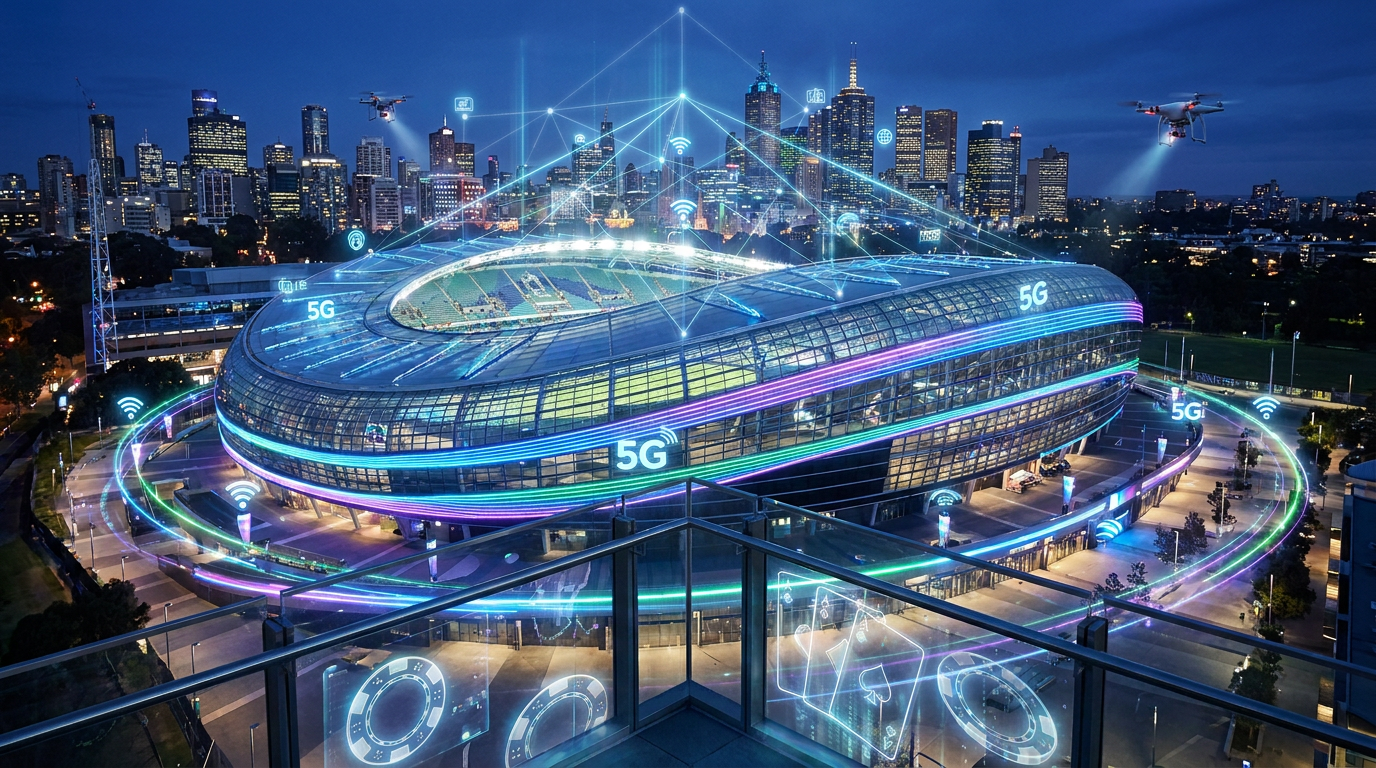
At 8.47pm AEST on a Saturday, a NRL try gets scored in Parramatta and, within seconds, the same moment is clipped, captioned and shared — not just to TikTok and X, but into the growing ecosystem of online casino side-screens that follow the game. The quiet transformation is the network: 5G, pushed hard by Telstra, Optus and Vodafone, is tightening the loop between live sport and the micro-moments people now consume between whistles, replays and ad breaks.
When a punter toggles from Kayo to a pokies online lobby during a scrum reset, they’re noticing whether a stream freezes, whether an pokiesnet page loads instantly on 5G, and whether a casino login times out after 20 seconds. In practice, it’s the difference between watching sport as a single screen and treating it like a live dashboard.
Why 5G Suits Online Pokies Australia
The thing about 5G in 2026 is that it doesn’t need to be perfect to change behaviour. It only needs to be consistently “good enough” in the AEST evening window, when Optus Sport has a Premier League match, Kayo is juggling NRL and AFL, and Stan Sport is running a Champions League feed. Those are exactly the hours when online pokies Australia spikes too — a second-screen habit that looks a fair bit like doomscrolling, only with reels swapped for reels.
Three specific behaviours show up repeatedly in Australian forums and app reviews in 2025–2026, and they map neatly to what 5G does well:
- Second-screen switching: people bounce between Kayo on a TV and casino app on an iPhone 16 during set breaks.
- Short-session play: five-minute bursts during half-time rather than a long desktop session.
- Login sensitivity: casino login screens get hammered, abandoned, then retried when the stream hits an ad break.
The pattern is blunt: sport creates the cadence, and 5G removes friction. Not all friction, of course. Indoor coverage in concrete-heavy stadium precincts still varies by carrier. Anyone who’s tried Optus 5G at Marvel Stadium knows the bar can drop suddenly. But the baseline is higher than 4G ever managed on a packed train or a crowded concourse.
The New Broadcast Stack
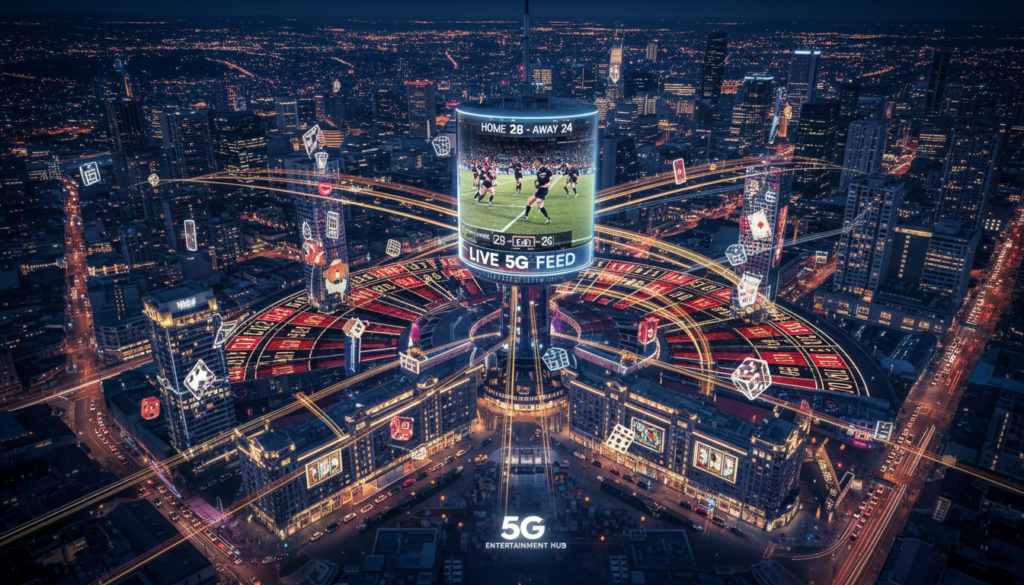
Australian sports broadcasting in 2026 is a stack, not a channel. The broadcast layer might be Fox Sports via Kayo, Nine via Stan Sport, or Optus Sport’s football package. The distribution layer is Telstra 5G, Optus 5G or NBN at home. Then come the overlays: live stats, social clips, group chats — and, increasingly, casino windows that sit beside the match like a permanent tab.
What stands out is how often the same device is doing both jobs. An Android 16 handset on Vodafone 5G can run a 1080p stream while a casino online Australia real money page refreshes in the background. That wasn’t a given in 2022. In 2026, it’s routine, especially on newer chips like Qualcomm’s Snapdragon 8-series and Apple’s A-series silicon.
Here’s how the “broadcast stack” typically looks for Australian viewers who also dabble in online casino play during games:
- Main screen: Kayo on a smart TV, or Optus Sport on an iPad.
- Second screen: iPhone or Samsung Galaxy running pokies online and a messaging app (WhatsApp, iMessage or Discord).
- Clip layer: TikTok/Instagram Reels for highlights that land before the official replay queue catches up.
The broadcast used to be the product. Now it’s the anchor, while everything else — including the slots — fights for attention in the gaps.
What Australian Players Actually Notice In 2026 Casino Apps
Ask around and you’ll hear lofty talk about UI refreshes. The blunt reality is smaller: players remember the apps that don’t stuff up during a live match. During State of Origin, people don’t forgive a spinning wheel of doom. They close the tab, go back to the replay or switch providers.
Based on the way online pokies casino for Australian players are discussed across app store reviews and local betting chat spaces, a handful of practical details keep showing up:
- Biometric sign-in: Face ID and fingerprint options reduce churn during short sessions.
- Fast payments: PayID and Apple Pay mentions have climbed since 2025, while manual card entry gets called “too fiddly”.
- Game info up front: RTP like 96% and volatility labels are now expected before launch, not buried in menus.
- Session controls: time reminders after 60 minutes are less controversial than people assume — mostly because they’re easy to dismiss.
It’s also where 5G’s “always on” feel changes the stakes: if the app is a tap away during every stoppage, it has to behave like a broadcast companion, not a clunky website.
Read more: Accessing Money Overseas Safely For Your Travel!
Micro-Streams, Micro-Games, And The Next Rights Fight
Sports broadcasters in Australia have already learned that the highlight clip is as valuable as the full match. The NBA leaned into this years ago; the NRL and AFL followed, and by 2026 you can see it in how quickly official clips land on YouTube and Instagram. 5G makes those clips immediate on trains and in stadium queues. Casino online habits mirror that shift: shorter sessions, faster loading, less tolerance for waiting.
Two industries end up chasing the same thing — attention measured in minutes, not hours. That’s why “micro” formats keep multiplying: micro-cameras on player tunnels, micro-stats on Kayo, micro-games in Online Pokies Casino app menus. Even the language converges. “Live”, “bonus”, “drop”, “promo” — different meanings, same urgency.
To be fair, plenty of viewers still want sport to be sport — one screen, one story, no tabs. But the detail that stands out is behavioural, not philosophical: 5G makes switching effortless, and effortless switching changes what broadcasters and casino operators build next.