What Is the Most Durable Pool Heater?
Many people invest thousands into building a beautiful pool, only to leave it sitting unused nearly half the year because the water feels like ice. That’s where a pool heater comes in as a game changer. With one installed, you can start swimming earlier in spring, keep going well into fall, and depending on your setup, you can enjoy your pool all year long.
If you’re searching for a pool heating Sydney, one of the biggest questions on your mind is probably: how long will it actually last? The answer depends heavily on which type you choose, since gas, electric, and solar systems age very differently. This blog will break down all the necessary information to help you make a wiser decision.
Gas Pool Heater: Fast Heat, Shorter Lifespan
No type of heating is quicker than a gas system. It can go cold to swimmable within a few hours, which makes it a good choice in case you need to have heat whenever you desire more than once a year. And that speed is at a price which you must carry, as:
- Gas prices may go up and running costs go up.
- The lifespan of gas heating units is shorter than other types, with a greater portion of this decrease due to the greater stress the internal components are subjected to by the combustion process itself.
- The maintenance will also be more expensive since you will be hiring an experienced technician to maintain and repair it.
This kind of heater is typically able to operate optimally after 5-10 years.
Solar Pool Heater: Low Costs, Slower Results
The highest cost you will incur by installing a solar pool heating system is its installation cost, but thereafter there is hardly anything you will spend to install it. It has a life expectancy of about 15-20 years. Matting or panels fitted on your roof sour the solar energy and heat the water as it flows past to the pool. It is as environmentally friendly as pool heating can be.
Nonetheless, there are challenges that come along with these benefits that include:
- It may take days instead of hours to get the pool to a comfortable temperature.
- Sunshine is directly connected with performance. The results will be limited due to cloudy skies or a misplaced roof.
- Not much space is wasted on solar panels; therefore, by installing panels in the roof to heat the pool, you might not be able to put solar panels in the roof to power your home. With this complexity, it’s best to have them installed by a professional.
Electric Heat Pump Pool Heater: The Long-Lasting Favourite
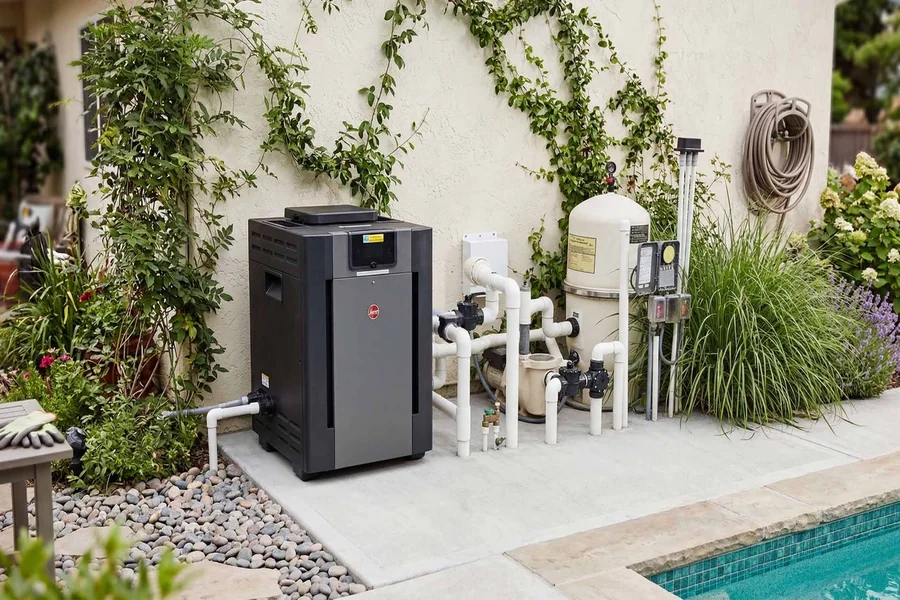
Most pool owners today prefer heat pumps and it is not difficult to understand why. Instead of using fuel, they absorb heat as ambient air, and transfer it to your pool water as it passes through the unit. This renders them energy saving, particularly in milder or warmer climate.
While 10 to 20 years is the typical lifespan, it’s also possible for a well-maintained heat pump to keep running for close to three decades. The units have been more reliable than ever with manufacturing improvements over the years that make them more sturdy.
The equipment and installation will probably cost you more initially compared to other systems, however, this will balance out due to decreased energy charges and reduced repair numbers down the line.
Which Pool Heater Is the Best Choice for You?
Lifespan is just one of the simple aspects to consider. Your local weather and what you really intend to do with your pool are equally important.
In case you live in an area where the sun is limited, a solar pool heater might not be easy to provide you with similar outcomes always. And with your dream routine of heating the pool in the morning and swimming at night, you will be more inclined to install a gas heater or heat pump, as solar will not meet that type of on-demand demand.
The electric heat pump is likely to emerge as the overall best. It is a combination of low operating expenses, high durability, fairly fast heating and intelligent technology which renders day to day operation easy. It works across all seasons, however, and is fine even in bad weather, meaning that you can stay on the move.
Read More: Why Swimming Pools Add Value and Relaxation to Homes
What You Can Do to Extend the Life of Your Pool Heater
Regardless of the kind of pool heating system you use, you should regularly maintain your system in order to ensure it has the longest life possible. How can you maintain your pool heater’s performance to make it more durable?
You can begin with putting your unit in the correct position. Care must be taken to ensure that your unit is placed in an area that does not expose it to extreme weather, moisture and pests. This plan may work and a professional technician may assist you in locating the best place where your pool heater may be installed.
Then, it is rather significant to carry out frequent checks. The following are some of the areas that you should beware of:
- On the unit rust or corrosion.
- The weird noises such as buzzing or whistling.
- Indications of a pest or rodent invasion into the system.
- Accumulation of leaves, twigs or other rubbish.
- Fluid leaks
- Water which does not warm up.
In case you notice any of these indicators in good time and book an appointment with a professional repairing the pool heaters, you can complete a simple repair to fix the heater problem, and stave off an expensive replacement.
Conclusion
A pool heater is a long-term investment and as such it is necessary to select a system to fit your property, swimming habits and budget.
Although a pool heating expert will install the unit, a licensed electrician Sydney will be required to do the electrical system connection. In the case of gas pool heaters, the gas connection must be done by a gas fitter in a safe and compliant manner with the Australian regulations.
The professionals should be consulted before making a decision. Prudent advice early on may guide you towards having your pool heating successfully installed, and functioning efficiently over the subsequent years.